
18 Mar 2026 Innowalk – a life-changing part of Lára’s everyday life

Back to Blog Overview
Lára is 17 and lives with Neurofibromatosis type 1, a rare condition that has caused blindness and affected her mobility. She shares her story of moving to Sweden for treatment, the medication that helped her regain herself, and how Innowalk became a life-changing part of her everyday life.
In this article, you can read about:
- Meet Lára, 17
- Life with a rare condition
- Moving to Sweden to receive the right treatment
- When Innowalk became life-changing
- The impact of standing and moving
- Her dream of becoming an author
Meet Lára, 17
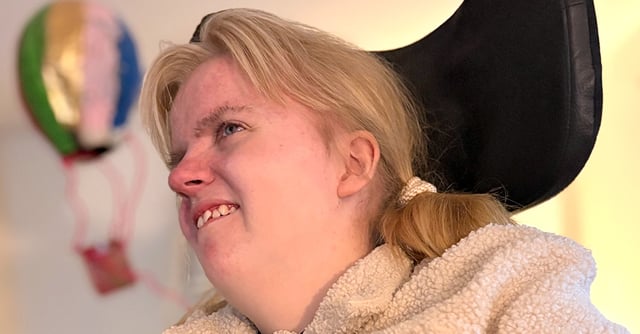
Lára is 17 years old. She lives with her family in Sweden, but was born in Reykjavík, Iceland. She enjoys beadwork, listening to podcasts and music – preferably Icelandic rap or pop.
Creativity is where she finds calm and joy, and ideas quickly take shape when she is given space to express herself. Lára describes herself as positive, cheerful and inventive – someone who easily finds new thoughts and new paths.
But Lára’s life has never followed an obvious route. From a very young age, her body set its own conditions, and everyday life was shaped early on by something that was difficult to understand and even harder to predict.
This is Lára’s story about life with a rare condition – and about how creativity, determination and joy for life can still take space, even when circumstances change.
Life with a rare condition
Lára lives with Neurofibromatosis type 1, often shortened to NF1. It is a genetic condition in which tumours can grow on nerves throughout the body. The condition is sometimes referred to as the “café-au-lait disease”, as it is characterised by light brown patches on the skin – something that was visible on Lára already at birth. She received her diagnosis at around one year of age.
In Lára’s case, the condition affected the central nervous system and became particularly aggressive. The tumours impacted, among other things, her vision and balance, which had major consequences early in life. At the age of two, Lára began to lose her sight, and by the time she was five she was completely blind.
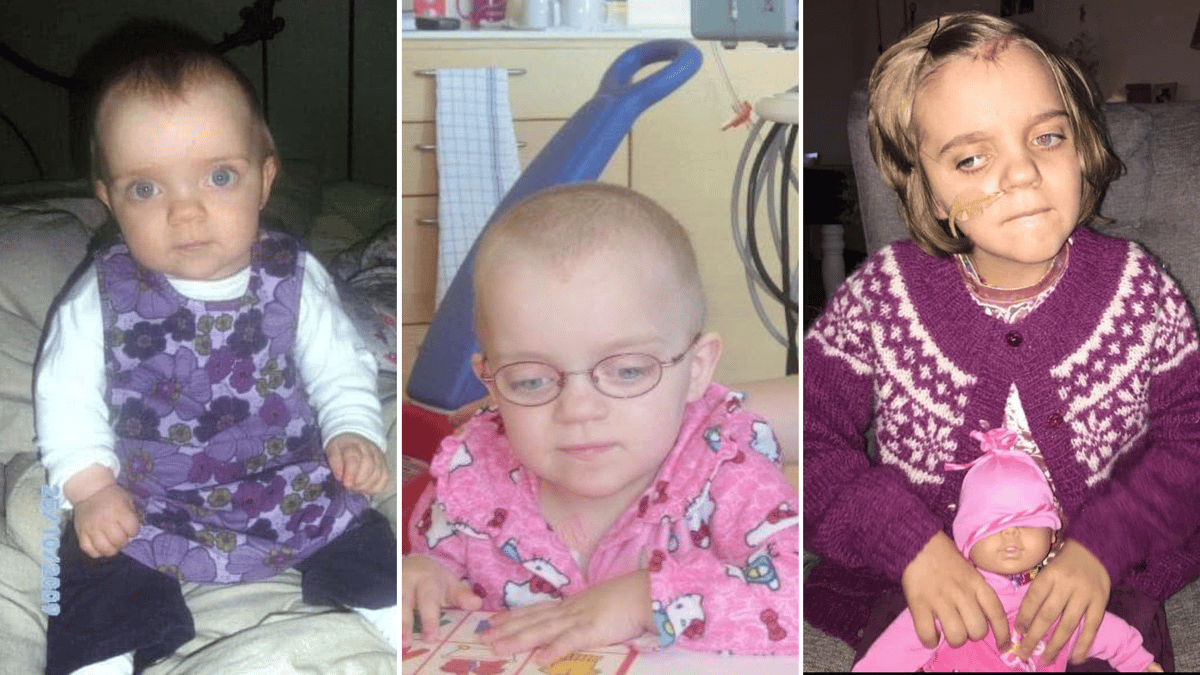
Despite losing her vision, she was able to move relatively freely for many years. However, as time passed and the condition progressed, her balance deteriorated further. Walking safely and steadily became increasingly difficult, and by the age of ten Lára could no longer walk. This was partly due to balance issues, but also the result of knee surgery that led to unexpected and dramatic consequences. After the operation, she developed stroke-like symptoms and became paralysed on the right side of her body.
Lára describes the period following the surgery as a rollercoaster. Doctors were unsure what had happened or what the future would look like, and Lára and her family were caught between hope and despair while waiting for answers. Just over a year later, a turning point came when Lára was given the opportunity to try a new medication.
Moving to Sweden to receive the right treatment
In 2015, when Lára was six years old, her family made an important decision. Together with her two sisters and her parents, she moved from Iceland to Sweden, as the treatment she needed was not available there. The move was a way of giving Lára a chance – to get closer to specialised care and new possibilities.
The major breakthrough came in 2018, when Lára became one of the first people in the world to receive a new medication for NF1. At that time, the condition had affected her severely. She had begun to lose both speech, sensation and appetite, and it felt as though parts of her were slowly disappearing.
When the medication started to work, everything changed. Functions that had been slipping away began to return, and Lára describes it as her awareness coming back – as if she became herself again. The joyful, vibrant Lára, with the spark that had always been there, returned.
Since then, the condition has remained stable. No new tumours have appeared, and the existing ones have stopped growing. For five years, the situation has remained unchanged, giving both Lára and her family greater security and the opportunity to focus on life – not just the condition.
When Innowalk became life-changing
In the summer of 2024, Lára received an Innowalk at home – a dynamic standing device that enables movement and gait training for people who are unable to stand or walk independently. The impact was greater than anyone could have anticipated, and one of the most significant changes concerned her digestive function.
For a long time, Lára’s bowel issues required continuous medical interventions in everyday life. For a teenager, this does not only involve physical challenges, but also has a major impact on independence, privacy and quality of life – particularly during a phase of life where the need for autonomy is great.
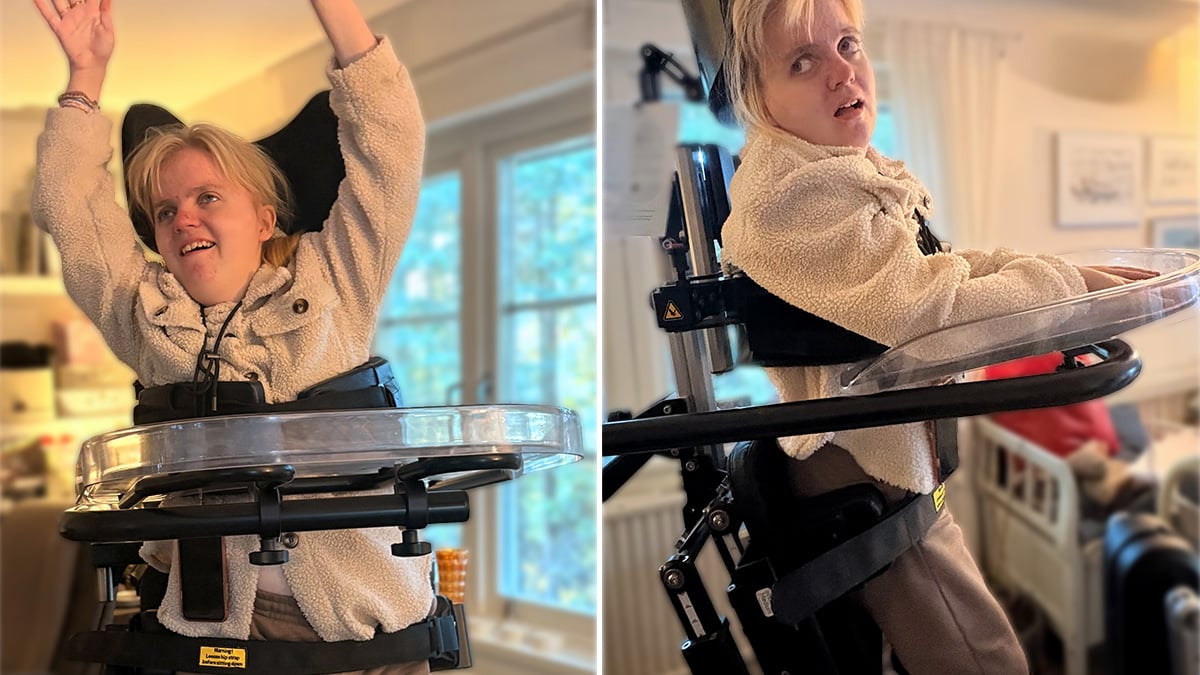
Lára would like to give special thanks to her personal assistant, whom she herself calls her hero. The assistant’s commitment and drive were crucial in ensuring that Innowalk was used regularly, which in turn led to clear improvements. The upright movement had positive effects throughout the body, and the need for bowel-related medication could gradually be discontinued. For Lára, this meant a tangible relief and, as she describes it, a life-changing sense of freedom that brought both increased independence and a stronger feeling of control over her own body.
Experience of Innowalk – in short:
- Enables regular movement in a standing position
- Clear improvement in bowel and digestive function
- Reduced need for daily medical interventions related to bowel issues
- Increased physical strength, particularly in the legs
- Improved breathing and ability to cough
- Greater independence in everyday life, including transfers
- Provides a holistic experience of physical and mental activity
The impact of standing up and moving
As her digestive function improved, Lára also began to notice clear changes in her physical strength. Through regular training in Innowalk, she gradually built strength in her legs, which made it possible for her to participate more actively in everyday transfers. Over time, she was also able to move more independently, for example by getting into bed without help. She also experienced improvements in breathing and coughing ability, which contributed to increased wellbeing and a greater sense of security in everyday life.
Previously, Lára had used an arm and leg trainer that worked satisfactorily and provided some movement in daily life. With Innowalk, however, she noticed a clear difference. The upright, dynamic movement activated the body in a different way and created a sense of wholeness that she had not experienced before. Being able to stand up while feeling her legs move provided both a physical and mental sense of activity and became an important complement to the increased strength and function she had built over time.
The dream of becoming an author
Another important device in Lára’s everyday life is her mobile phone, which has become a central part of her independence. With the help of apps for people who are blind, she can orient herself, take in her surroundings and receive support in daily life. But the phone is also something more than that – it is her writing tool. Using her phone, she writes her texts and collects ideas for future stories, building her dream step by step, word by word.
What began as a school assignment resulted in a book, written by Lára together with eight classmates, and clearly demonstrates her engagement and desire to tell stories. The book, Judith and the Special School, addresses prejudices surrounding special education and raises issues close to her heart.
For Lára, writing is both a way to express herself and a way to make an impact – to help people understand more, feel more and reflect a little further.
And Lára intends to keep writing. Because she wants to become an author. Because she has stories that deserve to be told. And because her own story shows that it is possible to find your spark again – even when life has tried to take it away.
We would like to extend our warmest and most heartfelt thanks to Lára for choosing to share her story with us.