

6 Oct 2022 (Last updated: 20 May 2026)Spinal cord injury (SCI): causes, symptoms, treatment, and recovery

Back to Blog Overview
Every year, up to 500,000 people worldwide suffer a spinal cord injury (SCI). The spinal cord is a vital bundle of nerves that carries signals between the brain and the rest of the body. When it is damaged, it can cause permanent changes in movement, sensation, and bodily functions.
This article includes:

- What is spinal cord injury (SCI)?
- What happens if your spinal cord is damaged?
- How do spinal cord injury levels affect the body?
- Can spinal cord damage be repaired?
- What is the most common type of spinal cord injury?
- What causes spinal cord injuries?
- What is the best treatment for spinal cord injury?
- What happens during spinal cord injury rehabilitation?
- How can gait training and assistive technology improve recovery?
- Can you fully recover from a spinal cord injury?
- What is it like living with a spinal cord injury?
- Where can you find support after a spinal cord injury?
What is a spinal cord injury (SCI)?
A spinal cord injury (SCI) occurs when there is damage to any part of the spinal cord or the nerves at the end of the spinal canal. This damage disrupts communication between the brain and body.
Spinal cord injuries can be:
- Traumatic: caused by accidents such as falls, car crashes, or sports injuries
- Non-traumatic: caused by medical conditions like tumors, infections, or bleeding
Although the spinal cord is protected by the vertebrae, injuries can still occur due to compression, bruising, or swelling, leading to partial or complete loss of function.
What happens if your spinal cord is damaged?
The effects of a spinal cord injury depend on the location and severity of the damage.
What is the difference between complete and incomplete spinal cord injury?
- Complete spinal cord injury means total loss of movement and sensation below the injury level
- Incomplete spinal cord injury means that some function remains below the primary level of injury. You may be able to move one or more limbs, and to feel parts of the body.
How do spinal cord injury levels affect the body?
The spinal cord is protected by 29 vertebrates and is divided into four main sections:
- Cervical (C1–C7) – neck
- Thoracic (T1–T12) – upper and mid-back
- Lumbar (L1–L5) – lower back
- Sacral (S1–S5) – pelvic area
Types of paralysis:
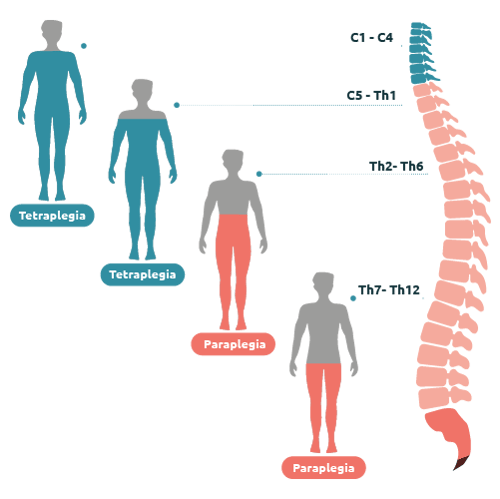
- Tetraplegia (Quadriplegia)
- Caused by injuries in the cervical spine
- Affects arms, hands, trunk, legs, and pelvic organs
- Paraplegia
- Caused by injuries below the cervical level
- Affects the trunk, legs, and pelvic organs
How injury level affects movement and function:
- Above C7: Limited or no function in all four limbs
- C5–T1: Some arm and shoulder movement, limited hand control
- T2–T6: Good arm function, limited trunk control
- Below T6: Better trunk stability and balance
Generally, higher spinal cord injuries result in more severe symptoms and may require powered mobility devices, while lower injuries may allow manual wheelchair use.
Can spinal cord damage be repaired?
Unfortunately, there is no cure for spinal cord injury at this time. Many scientists around the world devote their lives to do research on SCI. We hope that in the future new innovative advancement will lead to new opportunities for you who suffer from an SCI.
What is the most common type of spinal cord injury?
The most common types of SCI are:
- Incomplete tetraplegia
- Incomplete paraplegia
Together, they account for over 65% of spinal cord injuries, while complete injuries make up less than 35%.
What causes spinal cord injuries?
Across Europe as a whole, the current leading cause of spinal cord injury is:
- Falls
- Road traffic accidents
- Sports and recreational injuries
What is the best treatment for spinal cord injury?
Emergency treatment after spinal cord injury
Treatment begins immediately after injury. First responders focus on:
- Maintaining breathing
- Stabilising the spine
- Preventing further damage
Hospital care
Medical treatment may include:
- Surgery to remove bone fragments or herniated discs
- Stabilisation of the spine
- Management of swelling and complications
What happens during spinal cord injury rehabilitation?
After the acute phase, most individuals undergo specialised spinal cord injury rehabilitation.
A multidisciplinary team may include:
- Doctors
- Physiotherapists
- Occupational therapists
- Nurses
- Psychologists
- Social workers
Goals of spinal cord injury rehabilitation
- Strengthening remaining muscle function
- Improving mobility and independence
- Relearning daily activities
- Preventing complications
- Providing emotional and psychological support
- Using assistive devices for mobility and independence
Early rehabilitation is strongly linked to better outcomes in:
- Daily living skills
- Walking ability (when possible)
- Overall quality of life
How can gait training and assistive technology improve recovery?
For individuals with incomplete spinal cord injuries, rehabilitation often focuses on walking recovery.
This may include:
- Overground walking training
- Body-weight-supported treadmill training
- Robot-assisted gait training devices
Innovative technologies, such as dynamic standing devices, can support intensive therapy and improved mobility outcomes.
“People are not made for sitting,” says Tobias Forsberg. After a serious ice hockey accident, Tobias now uses the Innowalk at home to stay active in his daily life. See the story here.
Can you fully recover from a spinal cord injury?
Recovery from a spinal cord injury varies greatly.
- Some individuals regain partial function
- Others may experience permanent paralysis
- Recovery often continues for months after injury, especially within the first 6 months
Because each injury is unique, it is often difficult to predict outcomes early on.
“People are not made for sitting,” says Tobias Forsberg. After a serious ice hockey accident, Tobias now uses the Innowalk at home to stay active in his daily life. See the story here.
What is it like living with a spinal cord injury?
A spinal cord injury is a life-changing event that affects physical, emotional, and social well-being.
It’s common to experience:
- Uncertainty about the future
- Emotional distress or grief
- Challenges with work and relationships
Support from healthcare professionals, family, and spinal cord injury support organisations can make a significant difference.
Many people with SCI go on to live independent, productive, and fulfilling lives.
Where can you find support after a spinal cord injury?
Spinal cord injury associations provide valuable resources, education, and community support.
Useful resources: