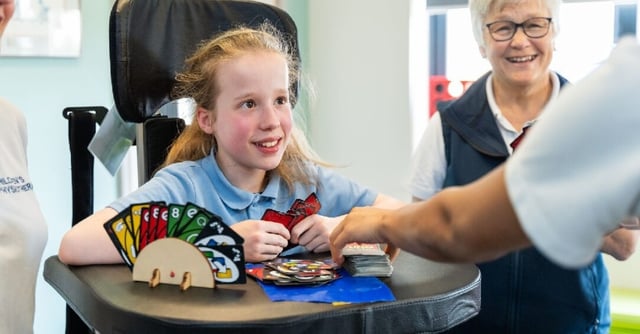
Innowalk Pro in schools: movement, learning and participation
The Innowalk Pro is a motorised assisted-movement device that lets pupils who cannot stand or walk independently take part in safe, weight-bearing, walking-like movement during the school day.
Special schools and colleges across the UK and Ireland use it to support posture, comfort, regulation and participation for pupils with complex physical needs, including those at GMFCS levels IV and V.
This guide is for SEN teams, physiotherapists, occupational therapists and parents. It covers how schools fit Innowalk Pro sessions into the timetable, what the research shows, and how to arrange a demonstration and loan. Wales calls this ALN and Scotland calls it ASN; the guidance applies across all of these settings.
What is the Innowalk Pro?
The Innowalk Pro is an innovative motorised device that enables assisted, repetitive, weight-bearing movement for individuals who cannot walk independently.
Unlike traditional standing frames or passive therapy solutions, the Innowalk Pro facilitates active-assisted movement in:
-
A standing or semi-standing position
-
Guided, repetitive walking-like motions
-
Fully supported, safe alignment
This unique combination helps students experience movement patterns that would otherwise be inaccessible, creating a powerful opportunity for physical activation, engagement, and improved well-being throughout the school day.
Innowalk Pro can be used with students who are 120-200 cm tall and up to 110kg in weight. A size Small (90-130 cm) will be available from December 2026. For more detailed product sizing and other information, please visit our Innowalk Pro product page.
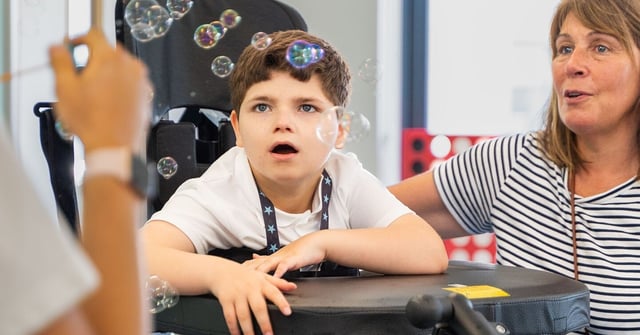
Who is the Innowalk Pro for?
The Innowalk Pro is designed for children and young people who have limited or no ability to stand and walk independently. Its adaptable support system and flexible positioning, from sitting to standing, mean that a broad range of pupils can use it, including those with:
- Cerebral palsy
- Acquired brain injury
- Spinal muscular atrophy (SMA)
- Muscular dystrophy
- Genetic syndromes and other conditions affecting movement
In special schools and colleges, this typically means pupils who spend most of the school day in a wheelchair or other seating, and who have few opportunities to bear weight or move their legs. Many have complex physical needs at GMFCS levels IV and V, and some also have profound and multiple learning disabilities (PMLD). The Innowalk Pro supports the user’s full body weight and guides the leg movement, so pupils don’t need to be able to take steps themselves.
Innowalk Pro vs standing frame
| Static standing frame | Innowalk Pro | |
| Position | Upright, still | Standing or semi-standing, stationary device |
| Leg movement | None | Motorised, guided walking-like movement |
| Suitable for pupils who can't step independently | Yes | Yes |
| Weight-bearing | Yes | Yes |
| Active-assisted and passive movement | No | Yes |
| Activity tracking | No | Steps, speed and duration via app |
| Use during lessons | Yes | Yes, with a tray for classroom tasks |
Innowalk Pro - creating opportunities in SEN
Creating opportunities for movement is essential in a special educational (SEN) setting – not only for students’ physical development, but also for their overall wellbeing, learning, and participation. The Innowalk Pro makes it easier than ever to integrate motivating, inclusive activities into the school day, supporting both students and staff in meaningful ways.
Why movement matters in SEN settings
Movement is essential for physical, cognitive, emotional, and social development. In SEN settings, students with profound or multiple disabilities often spend significant time seated or in static positions, which can lead to secondary health complications and limit their ability to actively engage in learning.
Regular, supported physical activity helps improve comfort, alertness, and regulation, while creating more opportunities for communication, interaction, and meaningful participation in the classroom.
The link between movement and cognitive engagement

Movement increases alertness, supports attention, and helps students regulate their sensory and emotional states - critical for effective learning.
Physical activity, from structured exercise to classroom movement, is linked to improvements in attention, memory, executive function, and academic performance across general and special needs populations.
Research indicates that when physical activity is properly adapted, it can lead to positive physical, cognitive, social, and emotional outcomes for children and young people with a range of disabilities.

Supporting physical health and preventing complications
Regular movement supports:
- Improved joint flexibility
- Healthy circulation
- Better digestive and respiratory function
- Reduced risk of pressure injuries
- Enhanced muscle strength and endurance
- Improved posture and alignment
- Better bone health
- Increased energy levels
- Improved mood and emotional wellbeing
- Greater independence in daily activities
Enhancing emotional well-being and self-confidence
Being upright, active, and participating builds confidence and can enhance a student’s sense of independence. Regular opportunities to move and engage can also improve mood, reduce feelings of anxiety, and help students feel more positive about their abilities and achievements.
Encouraging inclusion and active participation
Movement sessions can be incorporated into classroom activities, therapy programs, or social experiences, promoting greater involvement in school or college life. This helps students feel more included alongside their peers, supporting meaningful interaction, collaboration, and a stronger sense of belonging.
Did you know?
The World Health Organization (WHO) recommends that children and young people aged 5–18 engage in at least 60 minutes of moderate to vigorous physical activity daily. This should include mainly aerobic activity, plus muscle- and bone-strengthening exercises at least three times a week. Regular activity supports physical health, learning, and emotional wellbeing, and should be adapted to be safe, inclusive, and enjoyable for all, including those with disabilities.
Benefits of the Innowalk Pro for students with complex needs
The Innowalk Pro enables students with complex physical needs to access movement as a natural part of the school day. By supporting safe, assisted activity, it helps address both physical and cognitive barriers to participation—contributing to improved wellbeing, engagement, and inclusion.
Physical, cognitive and participation benefits
Schools and colleges using the Innowalk Pro in special educational (SEN) settings consistently report meaningful improvements in student engagement, physical health, and overall wellbeing. For students with limited or no independent mobility, it creates opportunities for movement that would otherwise not be possible during the school day.
A key benefit is the ability to provide regular, repetitive, weight-bearing movement in a safe and supported environment. This allows students to experience a walking-like motion, which can support:
- posture and alignment
- muscle activation
- overall mobility
- physical comfort
Being upright and moving also supports essential body functions. Improved circulation, respiratory function, and digestion are commonly associated with regular movement—areas that can be negatively affected by prolonged sitting.
Beyond physical outcomes, movement plays an important role in sensory regulation. Many schools observe that students become more alert, focused, and ready to engage in learning following sessions with the Innowalk Pro.
Importantly, the device also supports greater inclusion and participation. By enabling students to take part more actively in classroom routines, therapy sessions, and school life, the Innowalk Pro helps create a more accessible and equitable learning environment for students with complex needs.
Integrating the Innowalk Pro into the timetable
In the UK and across Europe, SEN schools report meaningful improvements when integrating the Innowalk Pro, including:
-
Students staying alert and engaged for longer periods
-
Reduced anxiety and improved regulation
-
Greater participation in class activities
-
Noticeable improvements in posture and comfort
Real-life examples show how regular movement sessions can transform a student’s school experience.
Supporting therapy goals
The Innowalk Pro can be used effectively as an adjunct to existing therapy sessions and as a tool to help attaintment of goals.
Incorporating movement into classroom learning
Students can participate in storytelling, group work, or sensory tasks while in the device. By using the Innowalk Pro within the classroom environment, they are able to be more actively included in lessons, engage alongside their peers, and participate in shared learning experiences in a meaningful and visible way, promoting a stronger sense of belonging and collaboration.
Using movement for regulation
Sessions can be tailored to help students:
-
Calm down
-
Activate before learning
-
Reset after transfers/tasks
Practical considerations for schools and colleges
Successfully introducing the Innowalk Pro in schools and colleges is about more than equipment – it requires a coordinated, team-based approach. When therapists and classroom staff work closely together, movement can be safely integrated into daily routines, creating consistent and meaningful outcomes for students.
Who runs Innowalk Pro sessions in a school?
Successful implementation of the Innowalk Pro relies on strong collaboration between therapy teams and classroom staff. Best practice typically involves therapists—such as physiotherapists or occupational therapists—leading on assessment and set-up. They prescribe individualised settings based on each student’s physical needs, which are then reviewed and adjusted over time as the student grows or their needs change, ensuring continued safety and effectiveness.
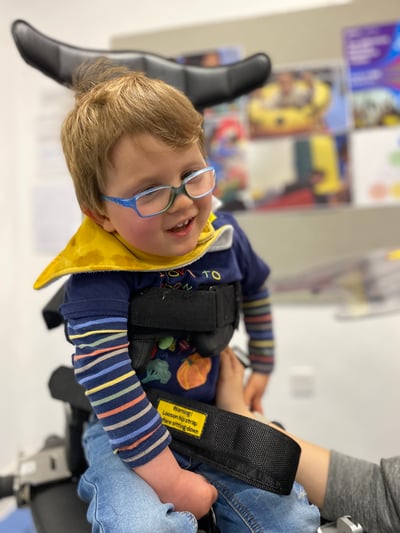
Classroom staff play a key role in day-to-day use. With appropriate training, they can confidently support regular Innowalk Pro sessions as part of the school routine, helping to embed movement into everyday learning and care.
Made for Movement supports this process through comprehensive training and ongoing guidance. Staff receive hands-on instruction to ensure safe and effective use, along with support for optimisation and troubleshooting when needed. Individualised movement plans help align sessions with each student’s physical, sensory, and educational goals, while regular monitoring ensures outcomes remain relevant and meaningful.
This shared, team-based approach creates a sustainable model where movement becomes a natural part of the school day – benefiting both students and staff over the long term.
Evidence and research supporting the Innowalk Pro
The Innowalk Pro is supported by a growing body of clinical experience, emerging research, and real-world outcomes from schools and therapy settings. Together, this evidence highlights its value in enabling meaningful movement for students with complex physical needs.
What does the research say about the Innowalk Pro?
By providing safe, weight-bearing, and guided movement in an upright position, the Innowalk Pro supports postural alignment and helps improve overall positioning throughout the day. For students with limited voluntary mobility, it also makes regular physical activity more accessible—something that can otherwise be difficult to achieve. This consistent movement can contribute to circulation, joint health, and general physical wellbeing.
Beyond physical benefits, schools report positive effects in the classroom. Students are often more alert, engaged, and ready to participate after sessions, suggesting that integrating movement into the school day can support attention, behaviour, and learning.
There is also growing indication that regular use may help reduce secondary complications linked to inactivity, such as stiffness and discomfort. Feedback from therapists and educators further supports this, with consistent reports of improved comfort, wellbeing, and engagement—reinforcing the value of embedding structured movement into daily routines.
Key findings from a UK special school research study
What did the heROIC study look at?
The heROIC study was the first UK study of the Innowalk Pro in a school setting. It took place at a London special school for 90 pupils with complex physical and learning needs, sponsored by Whittington Health NHS Trust. Twenty-seven children and young people aged 5–18 with cerebral palsy (GMFCS level IV or V) used the Innowalk Pro for 30 minutes, four times a week, for six weeks, on top of their usual physiotherapy. The study was published in Child: Care, Health and Development in 2023.
Results: Quality of life- The group's average CPCHILD score rose from 60.4 to 63.5 after six weeks and to 66.0 six weeks later. It was still above the starting point (64.8) after three months (p = 0.004).
- The biggest gains were in comfort and emotions (up 9.4 points, from 73.7 to 83.1) and positioning, transferring and mobility (up 5.5 points, from 38.5 to 44.0).
- Around four in ten pupils improved by at least six points (the level parents notice) in these areas: 48% for positioning, transferring and mobility, and 42% for comfort and emotions
- 88% of pupils (22 of 25) met or exceeded their individual functional goals after the six-week block.
- Goals were set together with the pupil, their parents, the physiotherapist and the teacher.
Real goal examples from the study:
- Lift the head for about two minutes to read a book while sitting on a bench
- Sit straight in their chair 50% of the time
- Sit cross-legged without support for 15 minutes
- Pull themselves to stand using a ladderback chair
- Take 4–6 purposeful steps using a standing sling
- Only need a break from their wheelchair because of pain at 5pm
- Get to sleep by midnight
Results: older pupils benefited most
Secondary-aged pupils' quality of life scores rose by an average of 6.5 points, against a small fall (0.8 points) for primary-aged pupils. The authors note that teenagers with complex CP are often more sedentary and their motor function tends to decline with age, which makes regular movement especially valuable at secondary school and college.
What the study did not show
- There was no clinically meaningful change in range of movement or spasticity straight after the six weeks.
- Gains faded after a break. Six to twelve weeks after the block ended, functional goals tended to return to their starting level and knee extension reduced by up to seven degrees.
- It was a single-group study without a control group, at one school, so results should be read with that in mind.
- Made for Movement lent the Innowalk Pro free of charge for the study. The study received no funding.
Recommendations
The authors recommend regular blocks of use, with no more than six weeks between blocks, to keep the benefits. A block model also lets more pupils share one device across the school year. Choose pupils against clear individual goals and review them regularly so access stays fair.
How to get started
Getting started with the Innowalk Pro is a guided and flexible process, designed to support schools and colleges at every stage - from initial exploration to long-term implementation. Whether you are just beginning to explore the solution or ready to integrate it into daily practice, Made for Movement provides hands-on support to ensure a smooth and successful journey.
Your step-by-step journey
Accessing the Innowalk Pro for your setting typically follows a structured pathway:
Initial consultation
Discuss your needs, student profiles, and goals with our specialists.Innowalk Pro demonstration day
A demonstration is the best way to experience the Innowalk Pro in practice. Sessions are tailored to your setting and can be delivered in any accessible space with step-free wheelchair access and a power supply. Hoisting requirements can also be accommodated where needed.
We recommend setting aside at least half a day to fully explore the device. During this time, you can:
- learn about key features and benefits
- try the device yourself
- trial it with selected students
Your Made for Movement Product Specialist will guide the session and help identify suitable participants based on size and needs.
Download the Innowalk demonstration (PDF)
Innowalk Pro loan period
Following a demonstration day, schools can apply for a short-term Innowalk Pro loan (typically 4–6 weeks, depending on availability). The loan includes training for up to six therapy or highly skilled support staff, assessment and setup for up to six pupils, and an optimisation session to keep everything running smoothly.
Your Product Specialist will also help with sizing, future pupil assessments, and can support fundraising or next steps after the loan period.
Training and staff development (post-purchase)
Once your school has purchased the Innowalk Pro, structured training ensures staff can use the device safely, confidently, and consistently as part of daily routines.
Innowalk Pro Operator Training
This full-day operator training (9:30am–3:00pm) is designed for staff who will be using the Innowalk Pro regularly in your setting. It prepares them to confidently and safely set up and run sessions based on prescribed settings.The course covers:
- background and clinical rationale for Innowalk Pro
- safety procedures and preparation
- user-specific adjustments based on therapist-prescribed settings
- practical handling, including safe “in and out” transfers
It is intended for operators who will not be assessing users or changing clinical settings, and includes small-group training with supported practice for up to four users.
Ongoing support
Implementing the Innowalk Pro is not just about introducing equipment—it’s about creating a sustainable, long-term movement programme. With the right support in place, schools and colleges can build confidence across teams and ensure consistent, high-quality use over time.
Supporting long-term success
Made for Movement provides comprehensive ongoing support to ensure staff feel confident, capable, and supported at every stage.
From the outset, schools receive hands-on training to enable safe and effective use of the Innowalk Pro. As confidence grows, our team continues to provide optimisation support, helping you tailor use of the device to each individual student’s needs and maximise outcomes.
We also offer responsive troubleshooting guidance, ensuring that any questions or challenges can be quickly resolved with minimal disruption to daily routines.
To maintain performance and reliability, the Uptime Service Program includes servicing and repairs—giving schools peace of mind that the equipment remains safe, effective, and ready for daily use.
For more established settings, we offer a CPD-accredited “Train the Trainer” course. This enables experienced staff to train colleagues internally, supporting scalability, consistency, and long-term sustainability within your organisation.
This partnership approach helps schools confidently embed movement into everyday practice, ensuring lasting impact for students with complex needs.
Frequently asked questions (FAQ)
What is the Innowalk Pro?
The Innowalk Pro is a motorised device that guides the legs through repetitive, walking-like movement while the user is supported in a standing or semi-standing position. It is designed for people with limited or no ability to stand and walk independently, and allows both active-assisted and passive movement.
Is the Innowalk Pro a standing frame?
No. A standing frame holds a pupil upright in a static position. The Innowalk Pro adds motorised, guided movement of the legs while the pupil bears weight, so they move rather than just stand. It also supports sit-to-stand transitions and does not use a harness.
Which pupils can use the Innowalk Pro?
It comes in two sizes. The Medium suits users 120–165 cm tall and up to 80 kg. The Large suits users 150–200 cm tall and up to 110 kg. The device will be available in size small 90-130 cm from December 2026. Typical users have cerebral palsy, acquired brain injury, spinal muscular atrophy, muscular dystrophy or a genetic syndrome. A physiotherapist or occupational therapist assesses each pupil before use.
How long is a typical Innowalk Pro session?
The therapist sets session length for each pupil. In the UK heROIC study, pupils used the Innowalk Pro for 30 minutes a day, four days a week. A 30-minute session at 65 RPM gives roughly 2,000 steps.
Who runs Innowalk Pro sessions in school?
Therapists assess pupils and prescribe their settings. Classroom staff who have completed the one-day Operator Training can then run daily sessions using those settings. Larger settings can take the CPD-accredited Train the Trainer course, which certifies experienced staff to train colleagues in-house.
How much space does the Innowalk Pro need?
The device has a footprint of about 2 m². Built-in transport wheels let you move it between rooms. You need step-free access and a power supply, and hoisting can be accommodated where needed.
How much does the Innowalk Pro cost, and how can schools fund it?
Pricing depends on size and service package, so contact us for a quote. Your Product Specialist can help with fundraising and next steps after a loan.
Can we try the Innowalk Pro before buying?
Yes. Start with a demonstration day at your school (allow at least half a day). After that, you can apply for a 4–6 week loan, subject to availability. The loan includes training for up to six staff, assessment and set-up for up to six pupils, and an optimisation session.
What does the research show?
In the heROIC study (Grodon et al., 2023), 27 pupils with cerebral palsy at GMFCS IV–V used the Innowalk Pro for 30 minutes, four times a week, for six weeks at a London special school. 88% met or exceeded their individual functional goals. Average quality of life scores (CPCHILD) improved, with the biggest gains in comfort and emotions, and the largest improvements were in secondary-aged pupils. There was no meaningful change in range of movement or spasticity.
UK Schools and colleges using the Innowalk Pro
Across the UK, more educational settings are bringing Innowalk Pro into everyday practice for their students with special educational needs and disabilities. The list and map below show where Innowalk Pro is currently in use in schools and colleges across the country, highlighting a growing network that supports young people's wellbeing, participation, and development.
List of schools using the Innowalk Pro
| School / college | Location |
|---|---|
| England | |
| Bedelsford School | Kingston upon Thames, London |
| Chailey Heritage School | Lewes, East Sussex |
| Hedleys College | Newcastle upon Tyne |
| Linden Lodge School | Wimbledon, London |
| National Star College | Ullenwood, Cheltenham |
| Northern Counties School | Jesmond, Newcastle upon Tyne |
| Pathfield School | Barnstaple, Devon |
| Richard Cloudesley School | Islington, London |
| Treloar's School | Holybourne, Alton, Hampshire |
| Scotland | |
| Calaiswood School | Dunfermline, Fife |
| Craighalbert Centre | Cumbernauld, North Lanarkshire |
| Oaklands School | Edinburgh |
| Saltersgate School | Dalkeith, Midlothian |
| Wales | |
| Ty Gwyn School | Ely, Cardiff |
| Ysgol Y Deri | Penarth, Vale of Glamorgan |
AuthorJen Wilkinson - Physiotherapist
Jen Wilkinson has a clinical background as a paediatric physiotherapist, working for the NHS in the North East of England before joining the Made for Movement team. As Territory Manager, she thrives on sharing her knowledge and experience with therapists, families and individuals with disabilities. Jen feels very passionate that exercise and physical activity should be accessible for everyone, and loves seeing first-hand the enjoyment that movement brings to so many people she meets in her role.