
Apr 20, 2026 What is Duchenne Muscular Dystrophy (DMD)?

Back to Blog Overview
Duchenne Muscular Dystrophy (DMD) is a rare genetic disorder that causes progressive muscle degeneration, primarily affecting boys. It is the most common and one of the most severe forms of muscular dystrophy in children. Symptoms typically appear in early childhood and worsen over time, eventually impacting mobility, breathing, and heart function.
In this article, we explain the causes, symptoms, stages, and treatment options for Duchenne Muscular Dystrophy.
What is Duchenne Muscular Dystrophy?
Duchenne Muscular Dystrophy is a neuromuscular condition characterised by the gradual breakdown of muscle tissue. The condition is caused by the body’s inability to produce dystrophin, a protein that helps maintain muscle strength and integrity.
Without dystrophin, muscle cells become damaged and weaken over time. The condition usually begins in early childhood and progresses rapidly. The muscles of the hips, thighs and pelvis are typically affected first, which often leads to difficulties with walking.
Symptoms of Duchenne Muscular Dystrophy
Symptoms of DMD usually appear between the ages of 2 and 5 and worsen over time.
Early signs include:
-
Delayed motor development (late walking)
-
Frequent falls
-
Difficulty running or jumping
-
'Waddling' or abnormal gait
-
Walking on toes
-
Enlarged calf muscles (pseudohypertrophy)
Characteristic sign:
Gower’s manoeuvre – using hands to “climb up” the legs when standing. Progressive symptoms:
-
Difficulty climbing stairs
-
Loss of ability to walk
-
Muscle weakness in the arms and upper body
-
Scoliosis (curvature of the spine)
Additional challenges:
-
Heart (cardiac) complications
-
Breathing (respiratory) difficulties
-
Learning or cognitive difficulties in some children
Causes of Duchenne Muscular Dystrophy
DMD is caused by a mutation in the DMD gene located on the X chromosome.
-
The condition follows an X-linked recessive inheritance pattern
-
Boys are primarily affected because they have only one X chromosome
-
Girls are typically carriers, though some may experience mild symptoms
In around one-third of cases, the mutation occurs spontaneously, meaning there is no family history of the condition.
DMD affects approximately 1 in 3,500–6,000 newborn boys worldwide.
How is Duchenne Muscular Dystrophy Diagnosed?
Early diagnosis is important for effective management.
Common diagnostic methods include:
-
Blood tests (elevated creatine kinase levels)
-
Genetic testing to confirm mutations in the DMD gene
-
Muscle biopsy (used less frequently today)
In some cases, diagnosis occurs earlier if there is a known family history.
The 5 Stages of Duchenne Muscular Dystrophy
DMD progression is often divided into five stages:
Stage 1 – Presymptomatic
Symptoms are minimal or unclear. Diagnosis may occur through genetic testing or family history.
Stage 2 – Early ambulatory
-
Waddling gait and toe walking
-
Difficulty standing up (Gower’s manoeuvre)
-
Able to walk and climb stairs, often with support
Stage 3 – Late ambulatory
-
Increasing difficulty walking
-
Trouble climbing stairs and standing up
-
Reduced endurance
Stage 4 – Early non-ambulatory
-
Loss of walking ability (wheelchair use)
-
Upper body strength still relatively preserved
Stage 5 – Late non-ambulatory
-
Severe weakness in arms and legs
-
Difficulty maintaining posture
-
Increased need for assistance in daily activities
Complications of DMD
As the condition progresses, additional health challenges may arise:
-
Respiratory issues due to weakened breathing muscles
-
Cardiomyopathy (weakening of the heart muscle)
-
Gastrointestinal difficulties, including swallowing problems
-
Scoliosis, affecting posture and comfort
These complications require ongoing monitoring and specialist care.
Treatment and management of DMD
There is currently no cure for Duchenne Muscular Dystrophy, but treatment focuses on slowing progression and improving quality of life.
Medical treatment:
-
Glucocorticoids (steroids) help slow muscle degeneration
-
These can prolong the ability to walk and delay complications
-
Cardiac and respiratory care become increasingly important over time
Emerging therapies:
-
Gene therapy (under development)
-
Exon-skipping treatments for specific mutations
Rehabilitation and support
A multidisciplinary approach is essential in managing DMD. Children are typically supported by a team that may include:
-
Physicians
-
Physiotherapists
-
Occupational therapists
-
Neuropsychologists
-
Special educational professionals
Physiotherapy
-
Maintains muscle flexibility
-
Prevents joint contractures
-
Supports mobility and function
Occupational therapy
-
Provides assistive equipment (wheelchairs, seating systems, adaptive devices)
-
Helps adapt the home and school environment
-
Promotes independence and reduces caregiver burden
Psychosocial support
-
Supports emotional wellbeing
-
Encourages social interaction
-
Assists families in managing the condition in everyday life
Assistive technology in Duchenne Muscular Dystrophy
Assistive technology plays a vital role in supporting independence, participation and quality of life for children and young people living with Duchenne Muscular Dystrophy. As the condition progresses, the right equipment can help maintain mobility, prevent complications and reduce physical strain on both the individual and their caregivers.
Mobility and positioning
As walking becomes more difficult, assistive devices help maintain independence and comfort:
-
Manual and powered wheelchairs provide mobility and enable participation in daily activities
-
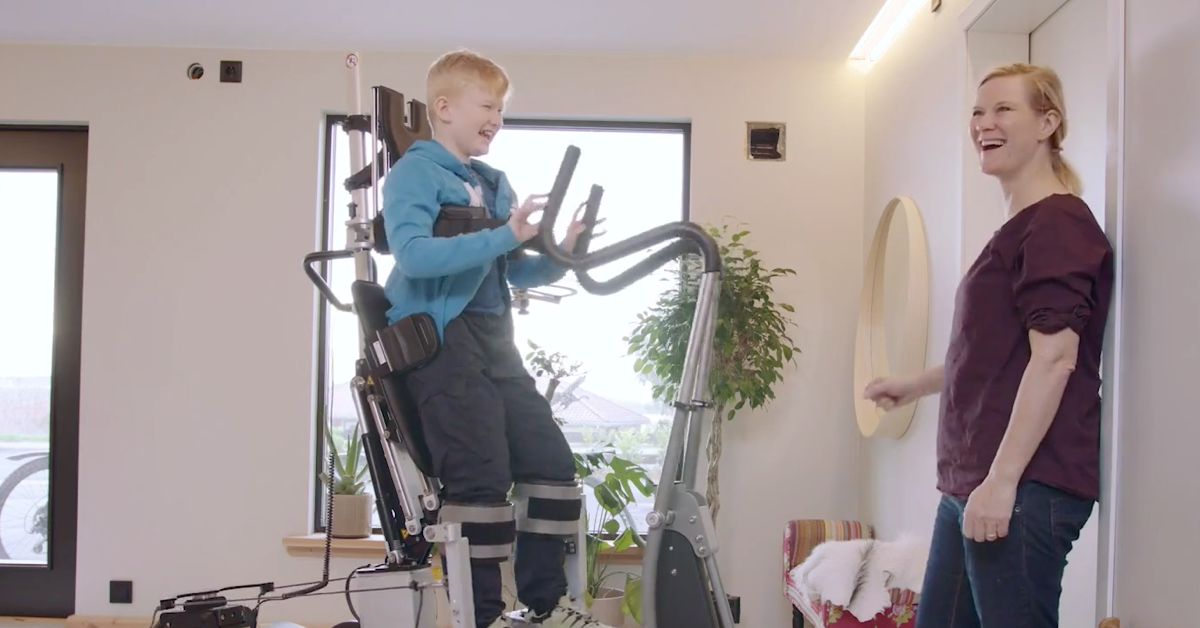
Standing devices support weight-bearing, bone health and circulation
-
Seating systems promote proper posture and help prevent scoliosis and discomfort
Early introduction of appropriate equipment can support continued engagement in school, social activities and family life.
Movement and physical activity
Maintaining regular movement is important in slowing secondary complications such as joint contractures, reduced circulation and decreased respiratory function.
-
Motor-assisted movement devices, such as the Innowalk, can enable repetitive, guided movement
-
These devices may support muscle and joint mobility
-
They can also promote activity in individuals with limited voluntary movement
Incorporating movement into daily routines can contribute to both physical and mental wellbeing.
Read more: Niels uses the Innowalk to support mobility in Duchenne Muscular Dystrophy.
Upper limb support and daily activities
As upper body strength declines, assistive technology can help maintain independence in everyday tasks:
-
Adaptive tools for eating, writing and communication
-
Arm supports to reduce fatigue during activities
-
Environmental control systems to increase autonomy
These solutions allow individuals to remain active and engaged for longer.
Respiratory and cardiac support
In later stages of DMD, assistive technologies become essential for managing vital functions:
-
Non-invasive ventilation supports breathing, particularly during sleep
-
Cough assist devices help clear airways
-
Monitoring equipment supports early detection of complications
The importance of individualised solutions
Assistive technology should always be tailored to the individual’s needs, abilities and stage of the condition. A multidisciplinary team plays a key role in assessing, prescribing and adapting equipment over time.
When introduced at the right time, assistive technology can:
-
Prolong independence
-
Enhance participation in daily life
-
Support physical health
-
Reduce caregiver burden
Life expectancy and prognosis
Advances in care have significantly improved life expectancy for individuals with DMD. With appropriate medical and supportive care:
-
Many individuals now live into their late 20s or 30s and beyond
-
Quality of life has improved due to better cardiac and respiratory management
Resources and support
- Duchenne UK
- Muscular Dystrophy Association’s fact page on Duchenne
- National Center for Advancing Translational Sciences’ page on Duchenne
- Muscular Dystrophy News Today