

May 13, 2026 Empowering movement: Innowalk Pro’s impact at National Star

Back to Blog Overview
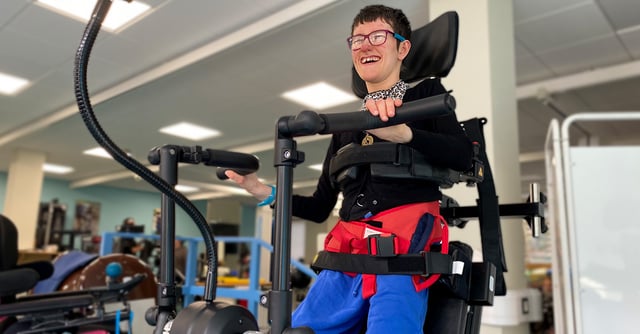
At National Star, supporting movement means fostering participation, comfort and independence for students with complex physical disabilities. Innowalk Pro dynamic standing device now plays a key role within the college, enabling access to supported standing and whole body movement for students who otherwise have limited opportunities for physical activity.
About the Innowalk Pro

Innowalk Pro is a motorised dynamic standing device, for mulitiple person use. It enables people with severe physical disabilities to experience supported standing with whole-body movement. It is used in therapy facilities or special school settings to promote mobility, circulation and overall wellbeing for individuals with limited independent movement.
In this article, we explore how National Star introduced the Innowalk Pro and how dynamic standing supports physiotherapy for students with complex physical disabilities.

- National Star: supporting students with complex physical disabilities
- Why dynamic standing matters in physiotherapy
- Introducing Innowalk Pro dynamic standing device at National Star
- How Innowalk Pro is used in daily physiotherapy sessions
- Clinical and functional outcomes observed across the college
- Social and emotional benefits
- Looking ahead
National Star: supporting students with complex physical disabilities
UK disability charity National Star supports around 254 students across four locations in England and Wales, with physical abilities ranging from highly ambulant to profoundly physically disabled. Over recent years, the complexity of students’ medical and physical needs has increased significantly — a trend reflected across specialist education as advances in healthcare enable people with life-limiting conditions to live longer, fuller lives.
As a college with 103 residents, National Star places strong emphasis on enabling students to live as active and healthy a lifestyle as possible. This includes addressing the well-known risks associated with prolonged sitting and sedentary behaviour, particularly for wheelchair users. Providing meaningful, achievable physical activity — regardless of ability — is central to this approach.
You can read more about National Star here.
Why dynamic standing matters in physiotherapy
Behind the introduction of Innowalk Pro at National Star is a large and highly experienced physiotherapy team. The department comprises 27 professionals — including qualified physiotherapists, fitness instructors, apprentice physiotherapists and physiotherapy assistants — delivering services across four college sites in Cheltenham, Hereford, and Mamhilad in Wales. National Star also delivers services in Worcester in partnership with The Heart of Worcestershire College.
The range of physical presentation among students accessing physiotherapy is broad. Some students are highly ambulant and train for events such as 10km runs alongside their physiotherapists. Others require hoisting for transfers and have very limited voluntary movement.
Over the last decade, however, the overall level of physical complexity has increased. Advances in neonatal care and medical management mean more young people are now surviving into adulthood with increasingly complex needs. As a result, the physiotherapy team is seeing higher levels of muscle tone, more complex postural challenges, and greater medical considerations across the student population.
To support this diverse cohort, the team delivers a wide range of interventions, including individual physiotherapy, aquatic therapy, stretching programmes, rebound therapy, fitness sessions and supported standing. Static standing frames have long played an important role within these programmes and continue to do so. However, for some students, static standing alone was not sufficient to address ongoing challenges such as joint discomfort, stiffness, reduced engagement and bowel motility concerns.
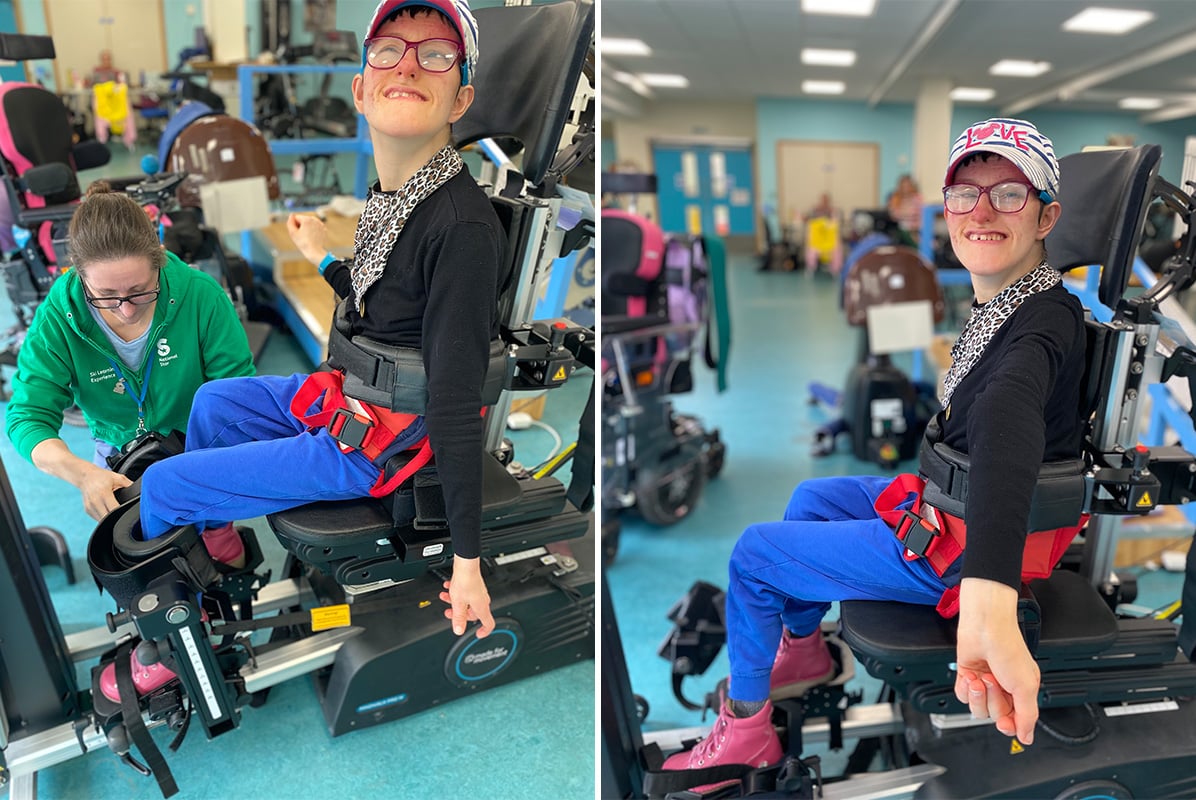
For students requiring high levels of support, achieving sustained weight bearing combined with reciprocal movement was particularly challenging within traditional approaches. The team identified a growing need for a solution that could provide the postural benefits of supported standing while also introducing safe, whole-body movement — and that could be delivered efficiently within a busy college environment.
Introducing Innowalk Pro dynamic standing device at National Star
The introduction of Innowalk Pro began with one student. A young person joining the college had previously used an Innowalk at school, and the team were able to see first-hand the difference dynamic standing had made to their physical comfort, engagement and overall wellbeing. This prompted an important question within the department: if one student could benefit in this way, how many others might respond positively?
In November 2022, the team hosted a demonstration day with Made for Movement. What began as clinical curiosity quickly developed into serious interest.
To evaluate its potential within their own setting, the physiotherapy team undertook a structured six-week service development project, supported by the loan of three Innowalk Pro devices. The aim was to collect meaningful data, explore outcomes across a range of students, and determine whether dynamic standing could add measurable value to existing therapy provision.
During the project, the team closely monitored student responses, focusing on areas such as bowel function, pain and discomfort, engagement with standing programmes, and tolerance of upright positioning. Innowalk Pro offered something distinctly different: a supported dynamic stand that combined upright positioning with whole-body reciprocal movement.
The outcomes provided strong justification for investment. Students demonstrated improvements in engagement, stamina and tolerance, alongside early indications of positive impact on posture, joint range and bowel management. Just as importantly, students actively chose to use the device — a powerful indicator of its acceptability within a college environment.
Following the project, National Star’s fundraising team successfully secured funding for both a medium and a large Innowalk Pro, embedding dynamic standing into ongoing therapy provision.
Also read and see the video from Ysgol Y Deri special school: Innowalk Pro - physical activity in a special needs school
How Innowalk Pro is used in daily physiotherapy sessions
Innowalk Pro is now integrated into regular physiotherapy sessions across the college. While students across a wide range of functional abilities access the equipment, those classified at GMFCS levels IV and V have benefited most consistently, as the device provides whole-body reciprocal movement that is otherwise difficult and time-intensive to achieve.
With two devices available, students typically use Innowalk Pro once or twice per week. The long-term ambition is to expand access further and, for some individuals, potentially replace static standing frames altogether — subject to future investment in both equipment and staffing.
Delivery is collaborative. Physiotherapists and physiotherapy assistants lead sessions, while residential facilitator staff support transfers and preparation. For a small number of students who have their own Innowalk within their residence, trained support staff facilitate sessions multiple times per week, embedding dynamic standing into everyday routines.
Sessions are carefully prepared to maximise active time. Equipment is set up in advance, and transfers are tailored to individual needs. Students are encouraged to take ownership of their sessions, choosing their standing height and walking speed, using trays or handles for upper limb support, and setting personal goals.
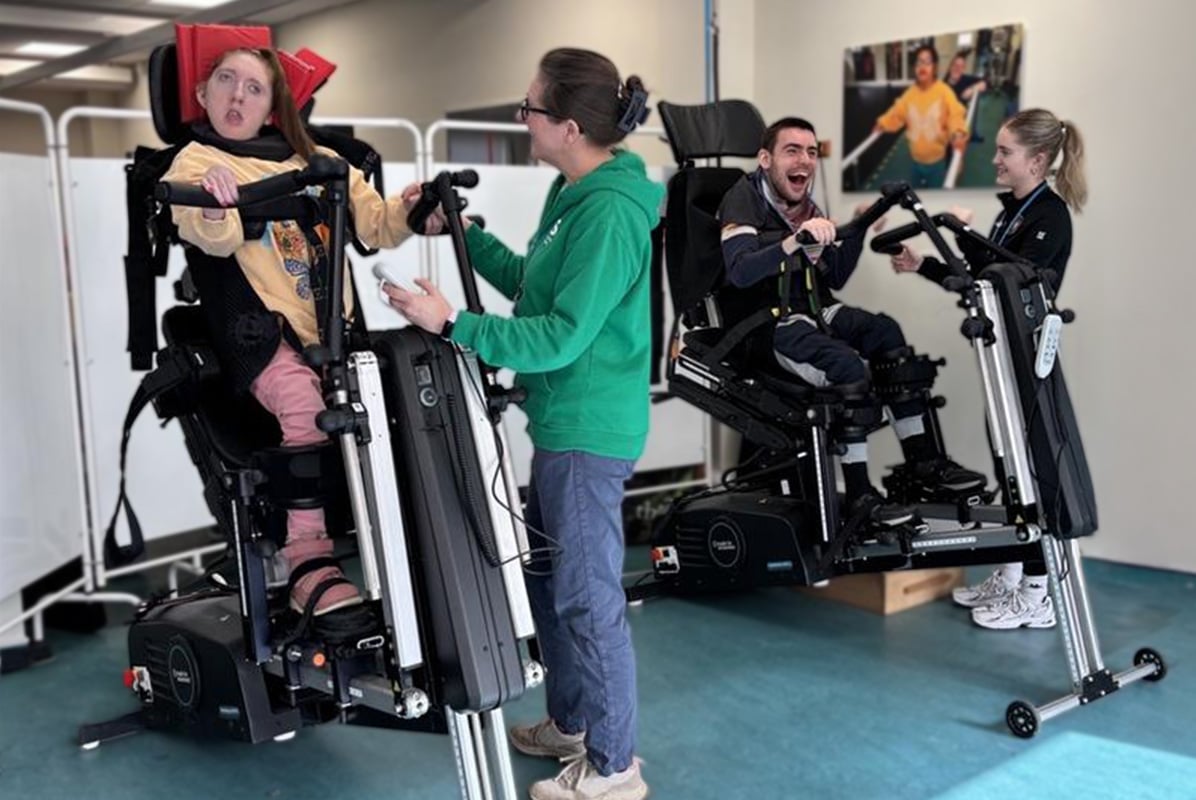
Where possible, students exercise alongside peers, with two Innowalks positioned side by side. Sessions may include music, videos or AAC devices, ensuring the experience remains engaging, functional and individualised.
Clinical and functional outcomes observed across the college
During a structured service improvement project in 2023, students used Innowalk Pro three times per week for six weeks. The physiotherapy team recorded improvements across a wide range of outcomes, including joint range of movement, muscle definition, posture, head and upper limb control, sleep quality and bowel function.
In some cases, longer-term benefits have included improved spinal alignment and reduced reliance on medication for constipation.
Reflecting on the clinical impact of dynamic standing using Innowalk Pro, Olivia Williams, Deputy Manager of Physiotherapy, explains:
“It has significantly progressed the management of complex disability and greatly improved the quality of the lives of its users.”
Importantly, benefits extended beyond physiotherapy sessions. Teaching, residential and therapy staff reported improved classroom engagement, better tolerance of wheelchair sitting, improved sleep, and increased comfort during personal care. Speech and language therapists and occupational therapists also noted improved engagement when delivering sessions alongside Innowalk Pro use.
Social and emotional benefits
Unexpected social benefits have also emerged. Students often choose to use Innowalk Pro together, setting challenges and encouraging one another, recreating the shared motivation that comes with exercising alongside peers.
Reduced pain and improved positioning following sessions have enabled students to participate more comfortably in evening social activities, supporting the college’s wider wellbeing and inclusion goals.
“Students often choose to use the Innowalk Pro over other therapy options — which tells us a lot about how they experience it.”
— Olivia Williams
Looking ahead
The physiotherapy team sees clear potential for expanding the role of Innowalk Pro in the future. With additional funding and staffing, dynamic standing could be accessed more frequently and, for some students, replace static standing as part of everyday routines.
Plans are already underway to conduct a formal research project focusing on students with complex physical disabilities, strengthening the evidence base and supporting wider adoption of dynamic standing as part of long-term management.
“Dynamic standing has shown us what’s possible when movement is accessible, comfortable and meaningful.”
— Olivia Williams.
We would like to extend our sincere thanks to the staff and students at National Star for sharing their experiences and insights. Their openness and willingness to contribute have helped us highlight the real impact that innovative therapy approaches can have on the lives of people with complex disabilities.