

10 Aug 2026Isak's research results show the Innowalk's significance in CP

Back to Blog Overview
Isak has cerebral palsy and has always loved movement and adventure. At the age of 11, he took part in research on the Innowalk – which showed some impressive results. More than ten years on, daily movement with the Innowalk remains an integral part of his everyday life and a key to quality of life.
In this article, you can read about:
- A life to be lived to the full
- Why daily movement is essential in cerebral palsy
- The Innowalk in research: results that changed Isak's everyday life
- The physical effects of the Innowalk – what the research showed
- The world is there to be discovered
A life to be lived to the full
In Isak's family, there has always been a fundamental belief: life is there to be experienced. When challenges have arisen, the focus has never been on what is limiting, but on how to find solutions and opportunities in the situation at hand. You can see it in Isak too. Today he is 22 years old and is described by his family as a funny, determined, and adventurous young man with an infectious zest for life. He loves it when things are happening, is always happy to join in on outings, cheers on his little brother Jakob from the sidelines when there is football or handball, and enjoys a swim in Grandma's pool just as much as a day on the golf course with the family.
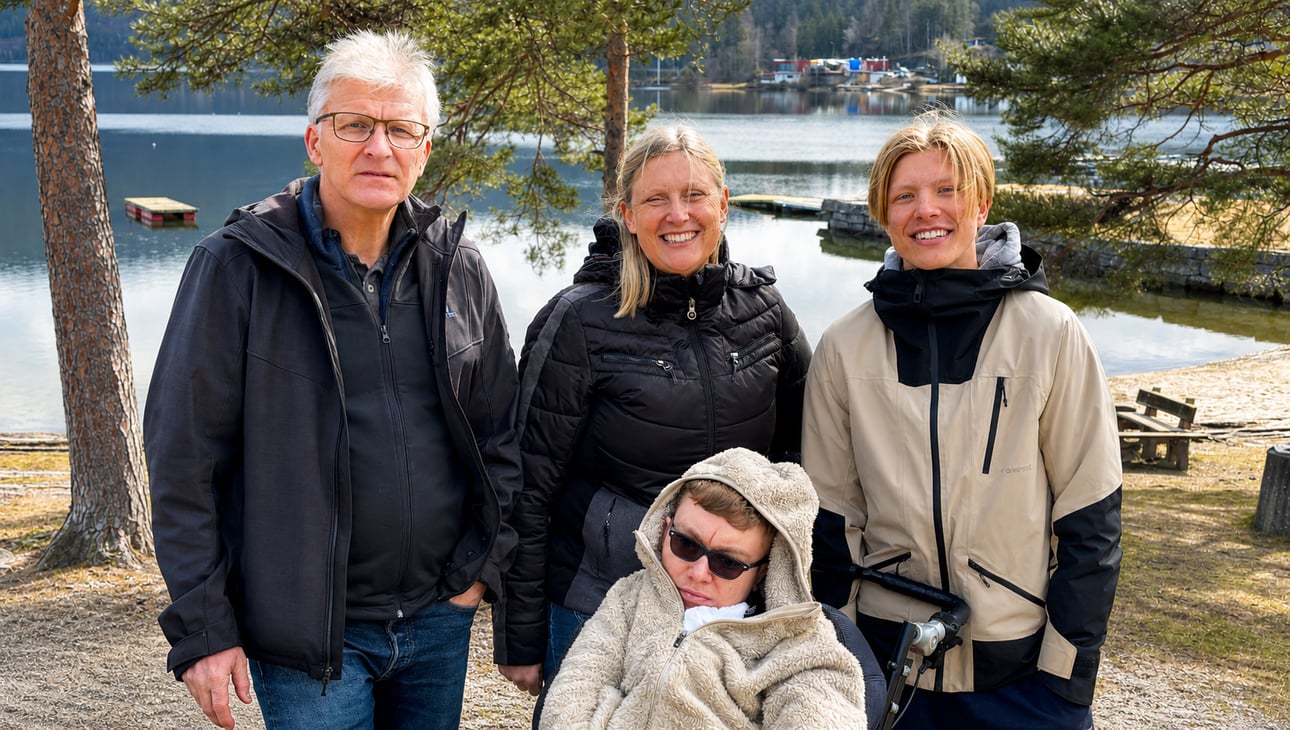
Isak has cerebral palsy (CP) GMFCS level 5, but has never let that define who he is. Instead, the family has always taken their lead from his interests, his personality, and his desire to be involved. Their guiding principle has been simple: to give Isak the opportunity to experience the world and live as active and fulfilling a life as possible.
Fact box: Gross Motor Function Classification System (GMFCS)

GMFCS describes motor function across five levels. The classification is based on self-initiated movements in sitting, transfers, and mobility, and includes 5 age bands. The focus is on the level that best describes the child's abilities and limitations – 'what they do' – based on typical performance in everyday settings. Below is the description for children aged 6–12:

GMFCS I – The child walks at home, at school, outdoors and in the community, and can climb stairs without the use of a rail.

GMFCS II – The child walks in most settings and climbs stairs holding onto a rail.

GMFCS III – The child can walk using a hand-held mobility device in most indoor settings. He or she may climb stairs holding onto a railing with supervision or assistance.

GMFCS IV – The child uses mobility methods that require physical assistance or powered mobility in most settings.

GMFCS V – The child is transported in a manual wheelchair in all settings. The child has limited ability to maintain head and trunk upright and to control arm and leg movements.
Why daily movement is essential in cerebral palsy
As a child, Isak could initiate steps on his own but needed assistance to carry out the movements. By using the NF-Walker, a gait trainer, Isak received the support he needed to be upright and moving. With the use of sticks, his steps could be guided and his gait trained in a way that gave him the opportunity to be active and involved in everyday life. He also stood regularly in a standing frame and was used to being on his feet for several hours each day. Despite the training, his body gradually became stiffer – something that is common for many people with CP.
At the same time, his need for movement was great. Isak never felt comfortable sitting still. He was at his best when he could be up, active, and involved in what was happening around him.
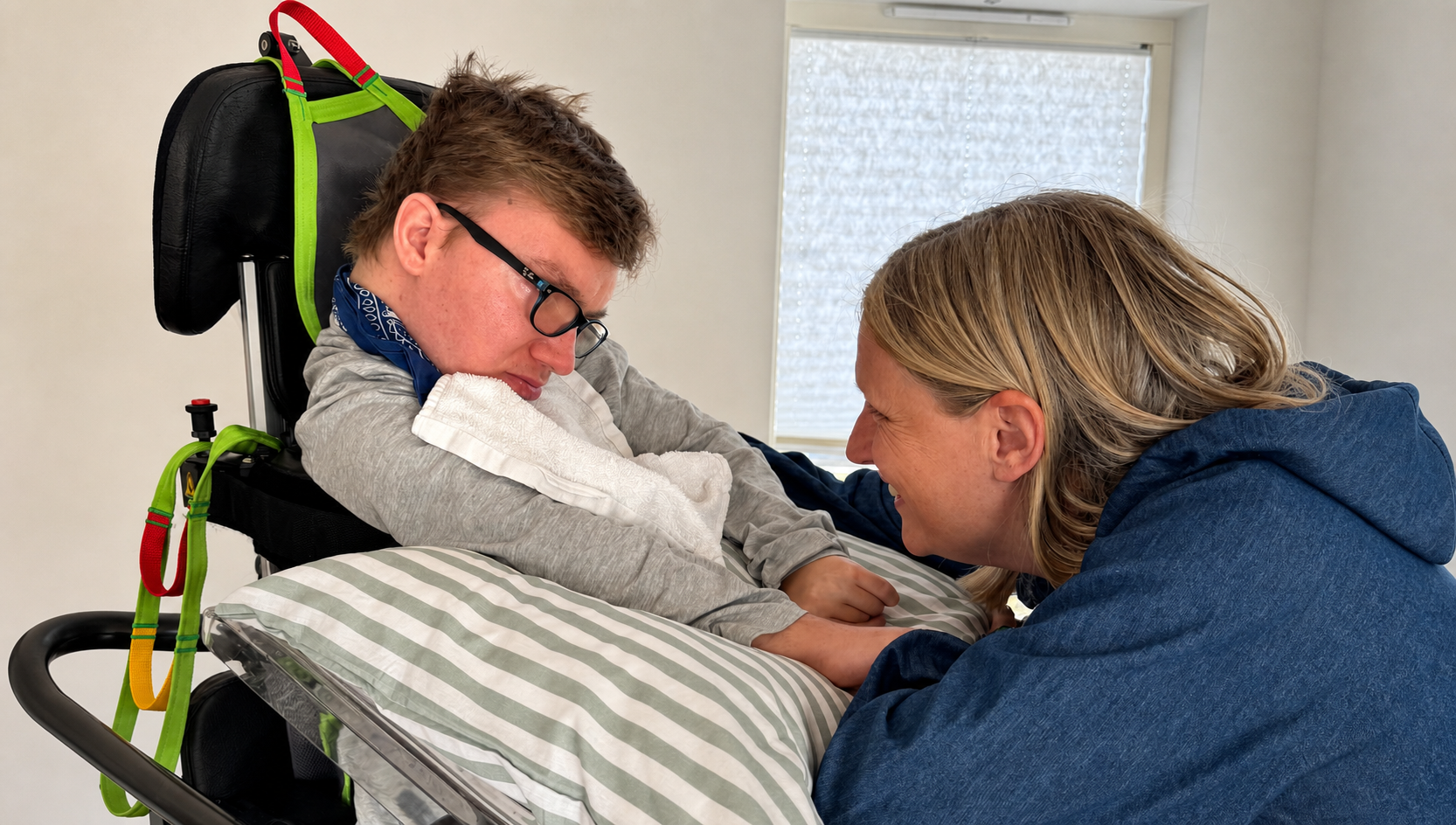
For the family, it became clear that movement was about so much more than exercise. It was about giving Isak the conditions to stay well, maintain his mobility, and continue living the active life he loved.
Read more: Vilgot is happiest when he's using the NF-Walker
The Innowalk in research: results that changed Isak's everyday life
When Isak was eleven years old, the family were invited to take part in a research study on a new assistive device – the Innowalk. They did not know a great deal about it, but they knew that movement had always made a difference for Isak, so the family saw it as an opportunity worth exploring.
From the very first time he tried the Innowalk, something special was evident. Isak usually makes it clear when he is uncomfortable with something by tensing up. But this time, the reaction was the opposite. His father Krister recalls that Isak relaxed, seemed content, and that a sense of calm came over his body almost immediately.
After Isak had been using the Innowalk regularly for a period, the researchers began to see results that stood out. Already at the first follow-up assessments, clear positive effects were noted, and Isak became one of the participants where the changes were most evident.
The physical effects of the Innowalk – what the research showed
The research results showed improvements across several important areas. Among other things, the following improved:
-
Oxygen uptake
-
Blood circulation
-
Passive range of motion in the lower limbs
The figures spoke clearly as the temperature in his feet rose and mobility in his hip joints increased. At the same time, the family noticed changes in everyday life. Isak's muscles were more relaxed, which made both dressing and personal hygiene easier, and after training he found it easier to clear mucus from his airways. All of these positive effects noted during the research study remain evident today.
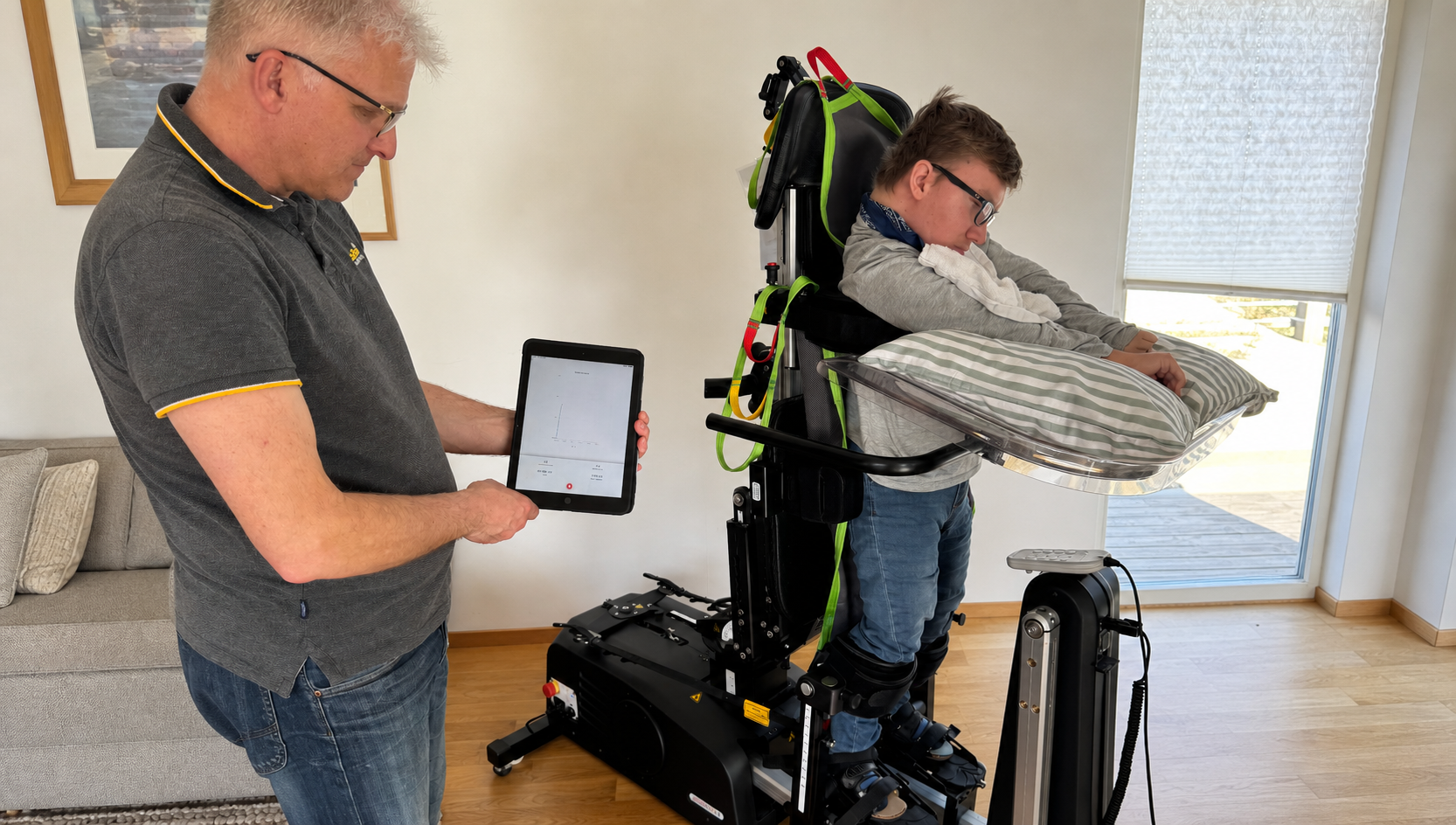
Over the years, the family has witnessed how Isak's body has responded to regular movement and how much good it does him to stand and move in his Innowalk. Today, more than ten years on, he still uses the device every day and often trains for up to three hours at a time.
Isak's mother and father describe training in the Innowalk as impossible to replace with any other form of activity. It gives the whole body the opportunity to move and has become an essential activity to allow Isak to maintain his mobility and continue living the active life he enjoys. Today he has almost full extension in both knees and hips – something the family sees as the result of many years of consistent training and movement.
I am convinced that the regular movement has contributed to him staying healthier and avoiding many hospital stays over the years.
– Åsa, Isak's mother
And perhaps the greatest effect is not what shows up in research results or measurements. For the family, it is about giving Isak the best possible conditions to continue living actively – to maintain his mobility, avoid complications, and continue to be the curious and sociable person he has always been.
Explore scientific articles, product studies and posters here.
The world is there to be discovered
There is a common thread running through Isak's life, and it is about being part of things. When the family plans something, they rarely start from what is not possible. Instead, they think about how it can be made to work. That attitude has meant that Isak has experienced far more of the world than many might have thought possible.
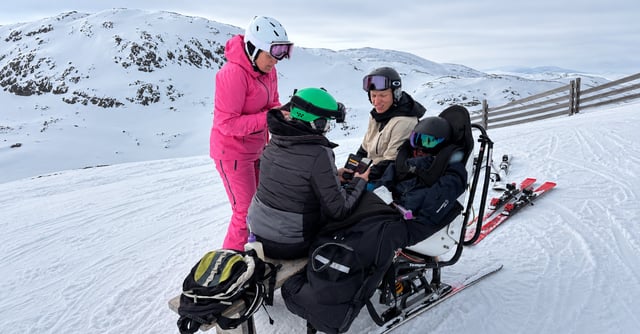
Over the years, he has collected memories from places near and far. He has swept down ski slopes in Val Thorens on a mono-ski, made his way along hiking trails that many believe are impossible to reach by wheelchair, and discovered new cultures, people, and environments. One particularly special memory is the trip to Japan in 2019. The family describes the country as a dream to explore by wheelchair, where the high level of accessibility and service made it possible for Isak to experience everything from sights and nature to culture and everyday life. For Isak, it was yet another proof that the world is bigger than the limitations others sometimes see.
And perhaps that is precisely what his story is about. About movement that creates opportunities, about curiosity about the world, and about a family that has never stopped believing that the next experience is worth striving for. Because when possibilities are allowed to lead the way, the world becomes a little bigger – and Isak gets to keep on exploring it.
We would like to extend our warmest thanks to Isak and his family for choosing to share their story with us. We hope their story can inspire more people to see possibilities, the value of movement, and the courage to keep on discovering the world.